IMMIGRATIONInternational Students & Foreign Workers
STUDY PERMITS
For many newcomers, studying in Canada is the first step toward building a future here. Graduates from Canadian colleges and universities may qualify for post-graduate work permits, allowing them to gain valuable Canadian work experience—a key advantage for future Permanent Residence applications.
To study in Canada, you must be accepted into a Designated Learning Institution (DLI) and demonstrate that you have sufficient funds to cover your tuition and living expenses. At Solvis Law, we assist with study permit applications whether you are applying from outside or inside Canada.
Who Does Not Need a Study Permit?
Certain individuals may be exempt from requiring a study permit, including:
- Short-Term Studies – If your program is less than 6 months and not part of a longer study plan.
- Diplomatic Staff & Family Members – If you are eligible, check with Global Affairs Canada for exemptions.
- Foreign Armed Forces Personnel – If stationed in Canada.
- Registered Indian Status Holders – Whether foreign citizens or Canadians.
- Minors (under 18 or 19, depending on the province) in specific cases:
- If one parent holds a Study or Work Permit (post-secondary studies still require a permit).
- If the minor or their parents are refugees or refugee claimants.
If your school requires you to complete language courses (English or French) before full admission, your study permit will cover only the duration of these courses plus one year. Once fully admitted, you can apply to extend your permit from within Canada.
Financial Requirements
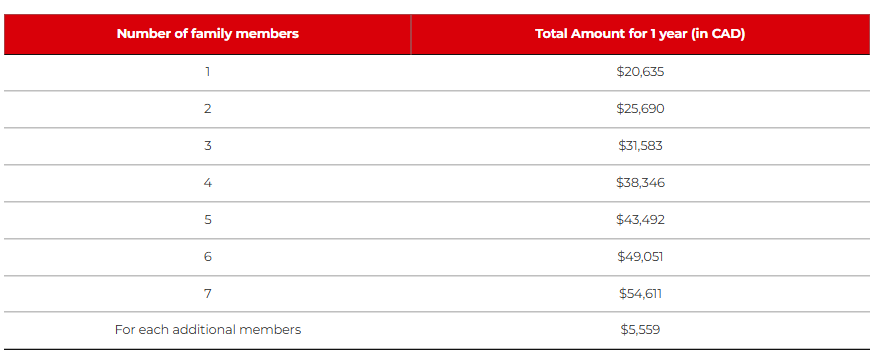
To obtain a study permit, you must prove you have sufficient funds to cover:
- Tuition fees;
- Living expenses for yourself and any accompanying family members for the first year of studies;
- Ongoing financial support for the remaining years of your program.
Funds may come from parents, family members, or sponsors, and in such cases, a letter of financial support will be required.
Specific financial requirements vary depending on whether you will study in Quebec or outside Quebec. Please refer to the Studying in Quebec page for the financial requirement amounts if you are studying in Quebec.
IMPORTANT: In addition to the amounts below, you will need to add the tuition cost for the first year.
At Solvis Law, we help you navigate the study permit application process, ensuring you meet all eligibility and financial requirements for a smooth approval process.
For Those Who Will Study Outside Quebec:
WORK PERMITS
In most cases, foreign nationals must obtain a work permit before they can legally work in Canada. Work permits can be open or closed, depending on the specific type of authorization granted. Additionally, some individuals may also need an entry visa before coming to Canada—please refer to Visit Canada for more details on visa requirements.
To obtain a work permit, you typically need pre-arranged employment from a Canadian employer authorized to hire foreign workers. However, if you are accompanying a spouse or common-law partner to Canada, you may qualify for a spousal work permit, allowing you to work without securing a job offer in advance.
At Solvis Law, we assist individuals and families in navigating the work permit application process, ensuring compliance with all requirements for a smooth transition to employment in Canada.
Who is Eligible for a Work Permit Extension?
To extend your work permit, you must qualify for a new work permit under one of the following categories:
- Temporary Foreign Worker Program (TFWP) – You have a valid Labour Market Impact Assessment (LMIA).
- International Mobility Program (IMP) – Your employer has provided you with an Employer Compliance Number (A#).
- Open Work Permit – You qualify under a specific Open Work Permit category; or
- Temporary Public Policy – You are part of a special public policy established by the Minister of Immigration, such as: Canada-Ukraine Authorization for Emergency Travel (CUAET), study and work permits for nationals of Israel and the Palestinian Territories, family members who fled conflict in Sudan, etc).
What is Maintained Status?
If you apply to extend your work permit before it expires and remain in Canada while your application is being processed, you can continue working under maintained status (previously known as implied status). This means you can legally work under the same conditions as your previous permit until a decision is made.
At Solvis Law, we guide clients through work permit extensions, ensuring compliance with regulations and maintaining their ability to work in Canada without interruptions. Contact us today for expert assistance with your application.
BUSINESS VISITORS AND WORK PERMIT EXEMPTIONS
Certain foreign nationals can enter Canada as business visitors or under work permit exemptions if their activities do not involve entering the Canadian labor market. Business visitors must:
- Be employed and paid outside Canada
- Ensure the business profits remain outside Canada
- Engage in international business activities
Work Permit Exemptions & Business Visitor Categories
- Global Skills Strategy (GSS) work permit exemption
Some highly skilled foreign workers in TEER 0 and 1 (formerly NOC 00, 0, and A) may qualify for a short-term work permit exemption, allowing them to work in Canada for:
- 15 or 30 days once every six or 12 months
- Researchers at publicly funded institutions may qualify for a 120-day exemption
Certain foreign nationals performing specific activities may also qualify for a work permit exemption outside the GSS.
- After-Sale Service
Foreign nationals may be considered business visitors if they are entering Canada to:
- Repair, service, set up, test, or supervise work under a service contract for specialized commercial or industrial equipment purchased or leased outside Canada.
Out-of-warranty repairs require a work permit.
- Supervisors of Installation
Foreign nationals may qualify as business visitors if they are:
- Supervising the installation of specialized equipment purchased or leased outside Canada.
- Dismantling equipment for relocation outside Canada.
- Providing training on specialized equipment as part of after-sales service.
- Board of Directors Meetings
Foreign nationals attending board meetings in Canada may be considered business visitors, even if they are paid for their advice and expertise.
- Sales Negotiations
Foreign nationals selling, taking orders, or negotiating contracts may qualify as business visitors, provided that:
- Goods or services are NOT delivered during the visit.
- If delivery occurs during the same visit, a work permit is required.
- Regular sales to the general public require a work permit.
Post-Graduate Work Permit (PGWP)
IMPORTANT: As of November 1, 2024, all PGWP applicants will be required to demonstrate a minimum language proficiency in French or English of (i) CLB 7 for university graduates and (ii) CLB 5 for college graduates.
Graduates from programs at public colleges will remain eligible for a PGWP of up to three years if they graduate from a field of study linked to occupations in long-term shortage.
A Post-Graduate Work Permit (PGWP) is an open work permit that allows international graduates to work anywhere in Canada, for any employer.
Who is Eligible?
To qualify for a PGWP, you must:
- Have completed a program of study at a Designated Learning Institution (DLI) that is approved for PGWP eligibility.
- Apply within the required timeframe after graduation.
- Ensure that this is your first and only PGWP, as it can only be granted once.
Institution and Program Eligibility:
Your program and institution must meet specific requirements:
-
- Minimum program length: 8 months
- Program outcome:
- an attestation of college studies (ACS)
- a diploma of college studies (DCS)
- a degree (associate degree, bachelor’s degree, master’s degree or doctorate)
- a diploma or a certificate
Post-Graduation Work Permit – Eligible Fields of Study List
-
If your program has a field of study requirement, it must be linked to occupations in long-term shortage in Canada. Eligible fields include:
- agriculture and agri-food
- healthcare
- science, technology, engineering and mathematics (STEM)
- trade
- transport.
The PGWP is a valuable opportunity for international students to gain professional Canadian work experience, which can significantly enhance their chances of qualifying for permanent residency through programs such as Express Entry or the Provincial Nominee Program (PNP).
At Solvis Law, we help graduates navigate the PGWP application process, ensuring compliance with all requirements and maximizing their opportunities in Canada.
